
You want a calm home… with kids? Brave. It’s possible though, and you don’t need a monastery or a white couch to get there.
You need a few simple, repeatable habits that lower everyone’s stress while keeping your boundaries firm. Think: fewer power struggles, more cooperation, and you not hiding in the pantry with pretzels. Let’s build that.
Start With the Atmosphere, Not the Rules

Rules matter, but vibes set the tone.
Kids read the room better than we think. If you move fast, talk loud, and react big, they ramp up too. So we start by calming the environment.
- Lower the volume: Use a softer voice and slower pace.
Kids mirror your energy. It’s unscientific magic (also science).
- Declutter key zones: You don’t need minimalism, just less chaos. Clear walkways, a simple toy shelf, and a basket for “today’s mess.”
- Use sensory anchors: Lamps over overhead lights, a diffuser with lavender or orange, calm background music.
Small tweaks, big effect.
Designate a “Calm Corner”
Skip the “time-out” chair that screams punishment. Create a “cozy spot” with pillows, a fidget basket, and a feelings chart. You’re not banishing a kid—you’re inviting them to co-regulate.
FYI: You can use it too when your eye starts twitching.
Connection First, Correction Second
Gentle parenting isn’t “let them run wild.” It’s “lead with connection, then guide.” When kids feel seen, they cooperate better. Wild concept, I know.
- Get on their level: Eye contact, kneel down, say their name. It stops 60% of battles before they start.
IMO, it’s the ultimate parenting cheat code.
- Validate the feeling: “You’re mad because the blue cup is dirty. That’s tough.” You don’t need to fix it—just see it.
- Then set the boundary: “We can’t throw cups. You can choose the green cup or wait while I wash the blue.”
Scripts You Can Steal
- “You wanted X.
It makes sense to feel Y. Here’s what we can do…”
- “I won’t let you hit. Your body is not safe right now.
I’m staying with you.”
- “We clean together for five minutes, then we play.”

Rituals Beat Willpower
Kids love predictability. Honestly, adults do too. Routines lower decision fatigue and reduce meltdowns without a single lecture.
- Anchor points: Build mini-rituals around wake-up, after school, dinner, and bedtime.
Same order, same cues.
- Visual schedules: Pictures for little kids, checklists for big kids. Outsource the nagging to paper. Genius.
- Micro-transitions: Give warnings: “Two more minutes,” then “Last thing,” then “Time to switch.”
Five-Minute Reset Routine
When the house goes feral, run this:
- Everyone drinks water.
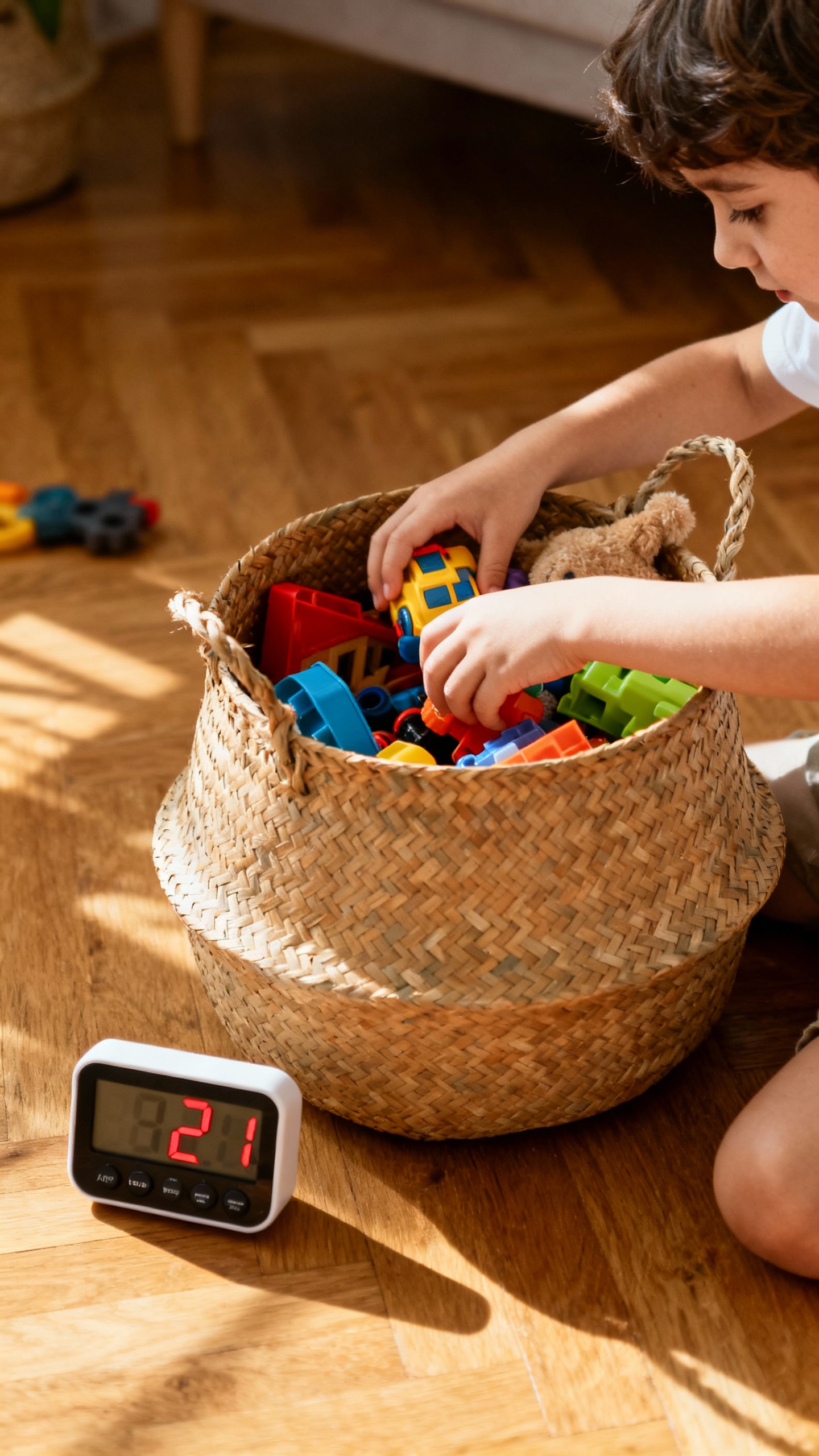
- Two-minute tidy with a timer and upbeat song.
- One calming activity: reading together, play-dough, or a quick walk.
- Check-in: “What do we need next?”
It sounds silly.
It works anyway.
Boundaries That Don’t Break You
Gentle doesn’t mean mushy. You can stay kind and still hold the line. The trick?
Set limits calmly, early, and consistently.
- State the boundary once, then act: “We don’t hit. I’ll move your body away.” Less lecturing, more doing.
- Offer controlled choices: “Shoes now or in two minutes?” “Brush teeth before or after pajamas?” Choices create buy-in.
- Use when/then: “When toys are in the bin, then we watch our show.” Natural, predictable, not bribery.
Consequences vs. Punishment
– Natural consequences: Kid refuses coat?
They feel cold. You bring it along without gloating. – Logical consequences: Throw blocks? Blocks take a break.
You’re not “taking away everything they love.” You’re keeping people safe.

Co-Regulate Like a Pro
Your nervous system leads the room. You can’t expect calm kids if you’re vibrating with stress. Not judgment—just biology.
- Breathing reset: In for 4, out for 6.
Do it visibly so they can mirror you.
- Label what you’re doing: “I feel frustrated. I’m taking three breaths.” That’s emotional literacy in action.
- Body-to-body calm: Sit close, offer a hug, or hold their hand. Some kids need motion—try a short walk or rocking.
When They’re Melting Down
– Keep your voice warm and steady. – Use few words: “You’re safe.
I’m here. Breathe with me.” – Don’t teach mid-storm. Teach after: “Next time, what could help your body?”
Make Cooperation the Default
If you only talk to kids when something goes wrong, expect resistance.
Build momentum with play, attention, and small wins.
- Play it in: Race to the bathroom, silly robot voice for clean-up, “Can you beat the timer?” Kids do more when it feels fun.
- Catch the good: “You put your shoes by the door. That helped us leave fast.” Specific praise = repeat behavior.
- Involve them: Give age-appropriate jobs. Toddlers can push laundry buttons.
Big kids can plan dinner. Ownership calms chaos.
The 10-Minute Daily “Special Time”
Pick 10 minutes where you follow their lead, no phones, no agenda. Say, “Your time starts now.” Watch defiance drop over a week.
IMO, this single habit upgrades everything.
Design for Fewer Fights
Set up your home so kids can succeed without constant correction. Less “no,” more “yes, if…”
- Yes spaces: Kid-proof one room where they can climb, build forts, and make noise.
- Accessible tools: Step stool for the sink, low hooks for coats, snack drawer with pre-approved items.
- Toy rotation: Keep out fewer toys. Swap weekly.
Less mess, deeper play, fewer “I’m bored”s.
Rhythms for Energy
Every day needs an arc: high energy (outside, movement), focused time (crafts, reading), reset (quiet play), and connection (family time). Plan the day like a playlist. You’ll feel the difference.
FAQ
Is gentle parenting just permissive parenting with prettier words?
Nope.
Permissive means no boundaries. Gentle parenting means clear boundaries plus empathy. You accept feelings, you limit behavior.
You don’t negotiate safety or respect, but you do care about the “why” behind behavior.
What do I do when my child hits?
Move their body away and protect others: “I won’t let you hit.” Keep your tone calm. When the storm passes, teach: “Hands are for keeping people safe. Next time, you can stomp, squeeze a pillow, or say ‘I’m mad!’” Practice those alternatives later when they’re regulated.
How do I stay calm when I’m triggered?
Prepare before the chaos.
Identify your tells (tight chest, fast speech). Use a go-to reset: breathe, sip water, or step into the hallway for 20 seconds. Script one line you can always say: “I need a pause.
I’ll help in a moment.” You’re modeling self-control—not perfection.
What if I tried routines and my kid ignores them?
Make them visual, practice when calm, and keep them short. Pair with a timer, music cue, or race. Follow-through matters: if bedtime routine ends with “one more show,” you just rewrote the routine.
Consistency beats intensity.
How do I handle backtalk respectfully?
Name the feeling, set the limit, offer a redo. “You’re frustrated. I won’t respond to rude words. Try again.” Then actually listen to the redo.
When kids repair, we move on. No grudge-holding—clean slate builds trust.
Will this work for neurodivergent kids?
The principles help, but you’ll need more structure and sensory support. Use clear visuals, predictable routines, movement breaks, and concrete language.
Collaborate with therapists if you have them. Gentle doesn’t mean one-size-fits-all; it means responsive.
Conclusion
A calm home with kids doesn’t mean quiet all the time. It means steadier rhythms, clearer limits, and more connection.
You’ll still have messes and meltdowns—welcome to parenting—but you’ll navigate them with fewer battles and more trust. Start small: one routine, one script, one cozy corner. Then watch the tone of your home shift, one ordinary day at a time.
Discover free printable activities, coloring pages, and learning fun at FreeKidsHub.com — perfect for screen-free quiet time and cozy days at home.
Explore more & elevate your glow
If you want inspiration on feminine identity, inner glow, and emotional empowerment, explore the Her Glow category.
If you’re looking for guidance, support, and real stories about motherhood, dive into our Motherhood category.
If you’re ready to focus on yourself again and build a softer, healthier routine, explore the Self-Care category.
For elevated routines, soft luxury living, and everyday elegance, discover the Lifestyle category.
If you want to deepen emotional connection and create a more feminine, balanced partnership, visit our Relationships category.
For beauty, style, confidence, and a glowing feminine appearance, explore the Beauty & Style category.