
You love your kids. You also love silence, sleep, and one cup of coffee that stays hot for more than 90 seconds. When those things disappear, your patience often does too. Let’s fix that. Here’s a real-world guide to stop snapping when you’re overloaded, even on the days that feel like a reality show with no commercial breaks.
Know Your Snap Triggers (So You Can Catch Them Earlier)
You don’t just explode out of nowhere. There’s always a fuse. Identify it.
- Common triggers: hunger, noise overload, messy spaces, running late, constant interruptions, decision fatigue.
- Body signals: tight jaw, hot face, shallow breathing, headache, clenched fists.
- Thought traps: “They never listen,” “I can’t do this,” “Everything is on me.”
Quick Reset Script
Say this (out loud if you can): “I feel overloaded. I need 60 seconds.” Then do one of these:
- Hands on heart, slow inhale for 4, exhale for 6 (repeat 5 times).
- Splash cold water on your face. Science-y bonus: it triggers your calming reflex.
- Look out a window and name five things you see. Boom, brain interrupt.
Swap The Snap With A Go-To Line
When you’re at a 9/10, you need a sentence you can grab without thinking. Preload it.
- Instead of yelling: “Stop it right now!”
- Try: “Pause. I’m not calm yet. We’ll talk in one minute.”
Other Ready-To-Use Lines
- Boundary + calm: “I want to hear you. I need quiet first.”
- Team vibe: “We solve this together. Shoes on, then we chat.”
- Validate + direct: “You’re mad. I get it. We still clean the blocks.”
FYI: Kids mirror your tone more than your words. Keep it short and firm. No speeches. You’re not filibustering a toddler.
Build A Low-Overwhelm Home Routine

When your environment calms down, you do too. A few tweaks go a long way.
- Predictable pockets: Same playlist for mornings, same 10-minute tidy before dinner.
- Decision diet: Pre-pack snacks and clothes the night before. Fewer choices = fewer meltdowns (yours and theirs).
- Noise buffer: Headphones, white noise, or a “quiet basket” with books and fidgets for daily reset time.
- Visual aids: Picture routines for kids. Saves your voice. Also saves your last nerve.
Two-Minute “Calm Corner” Setup
Create a tiny nook with:
- A comfy pillow or bean bag
- Two calming tools (squishy ball, coloring, pop-its)
- A feelings chart or simple “How’s my engine?” scale
Not a punishment zone—just a regulation pit stop for anyone in the house, adults included.
Say The Hard Part Out Loud (Repair After You Snap)
You will snap sometimes. Humans do. What you do after teaches your kid emotional skills you never got in a manual.
- Own it fast: “I yelled. That wasn’t okay.”
- Name your feeling: “I felt overwhelmed and angry.”
- Make it safe: “You’re not in trouble. I’m working on calmer words.”
- Plan together: “Next time I’ll take a pause. Can we try again?”
Why This Works
– It lowers shame for everyone.
– It models accountability.
– It resets connection so behavior actually improves.
IMO, repair beats perfection every single time.
Micro-Breaks That Actually Regulate You
You don’t need a spa day. You need teeny pockets of nervous system relief.
- Box breathing: In 4, hold 4, out 4, hold 4. Two rounds while the pasta boils.
- Temperature shift: Hold an ice cube. It yanks your brain out of rumination.
- Move it: 30 seconds of wall push-ups or stair bursts = instant mood bump.
- Sensory swap: Chew gum or sip something cold. Oral input calms more than you think.
Red, Yellow, Green Check-In
– Green: cruising, regulated.
– Yellow: edgy, irritable.
– Red: snap zone.
If you’re yellow, preempt with water, protein, and a 90-second reset. If you’re red, use your go-to line and step away if safe.
Boundaries That Protect Your Sanity
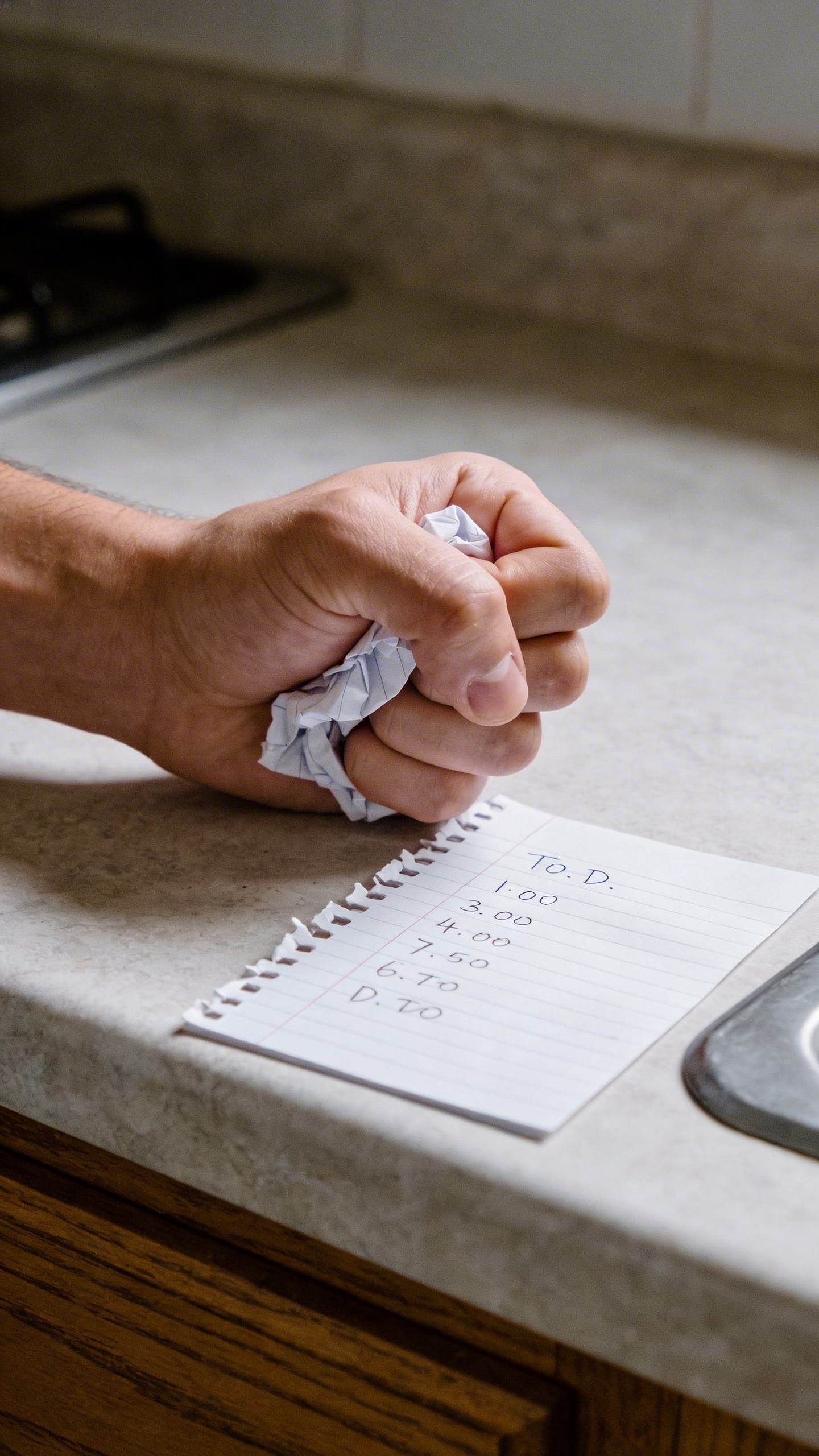
Not every request deserves an immediate yes. Shocking, I know.
- Time boundaries: “I’ll help after my two-minute timer.” Set it. Honor it.
- Task boundaries: One instruction at a time, not eight. Kids (and adults) listen better.
- Screen boundaries (for you): Phone in a basket during high-stress windows. Notifications equal instant irritability, IMO.
- Help boundaries: Ask your partner/kid: “Fold towels or dishes?” Choice = buy-in.
When You’re Solo Parenting
– Pre-make “emergency dinner” (quesadillas, frozen dumplings).
– Bath-time equals reset-time: lights low, music on, you breathe.
– Use “quiet minutes” coupons: Kids earn 5 minutes of solo play, you take 5 to reset.
Teach Kids To Read The Room
Kids can learn your signals so they don’t poke the bear (you) during your red moments.
- Make a family code: Green, Yellow, Red cards on the fridge.
- Practice in calm times: “When I’m red, you can bring me the blue pillow. I’ll breathe, then help.”
- Reward reading the room: “Thanks for waiting till my timer. High five.”
FAQ
What if I snap before I even notice I’m overwhelmed?
Pause immediately and repair. Say, “I got loud. I’m taking one minute.” Walk away if kids are safe. Do one grounding move (cold water, slow exhale), then circle back. The earlier you interrupt the cycle, the shorter the fallout.
How do I handle constant sibling fights without yelling?
Move from referee to coach. Separate first: “Two corners, two minutes.” Then rejoin with a script: “Tell me what you each wanted. What’s one fair plan?” Keep it boring and consistent. Drama fades when you stop feeding it energy.
What if my kid only listens when I yell?
That’s conditioning, not destiny. Start with calm, firm, short instructions plus follow-through. Example: “Shoes now.” Wait 10 seconds. If no action, guide physically and gently, or remove a privilege later. Consistency retrains the pattern—yelling becomes unnecessary background noise.
How do I manage my own stress when I have zero time?
Use habit piggybacking. Attach 60-second resets to things you already do: breathe while the microwave runs, stretch after buckling car seats, drink water before coffee. Micro-doses count, and they stack.
Is therapy or coaching worth it for this?
If snapping feels constant or scary, yes. A few sessions can give you customized scripts, co-regulation tools, and support for burnout, anxiety, or ADHD. Think of it like hiring a mechanic before the engine light turns red again.
What should I do if I said something hurtful?
Repair specifically: “I said ‘You’re impossible.’ That was hurtful and untrue. I was overwhelmed. I’m working on talking with respect, even when mad.” Then reconnect physically if your child wants—hug, sit close, read together.
Conclusion
You can’t eliminate overwhelm, but you can stop handing it the mic. Know your triggers, prep your go-to lines, and build tiny systems that keep everyone’s nervous system out of the danger zone. You’ll still have messy days. But with repair, boundaries, and a few clutch resets, you’ll snap less and connect more—and that’s the win that changes everything.
Discover free printable activities, coloring pages, and learning fun at FreeKidsHub.com — perfect for screen-free quiet time and cozy days at home.
Explore More & Elevate Your Glow
Step into your feminine energy, build confidence, and reconnect with your inner glow in the Glow Life category.
For real, supportive, and emotional content around motherhood, daily balance, and growth, explore our Motherhood category.
Create calm routines, slow down, and take care of yourself with intention inside the Self-Care category.
Discover soft luxury living, daily rituals, and feminine lifestyle inspiration in the Lifestyle category.
Build deeper emotional connections and create more balanced, meaningful relationships in the Relationships category.
Elevate your beauty, confidence, and feminine glow in the Beauty category.